
Why InForm exists.
Most MRI clinics start with a scanner. InForm started with a purpose.
If MRI has advanced so far, why are people still waiting months for answers?
A torn meniscus. A stress fracture. An ACL that isn't quite right. The injury happens in a moment, but the answer can take months. The wait to get an appointment. The wait for the scan. The wait for the results. By the time someone knows what's wrong, they've lost time they can't get back.
Where it all started.
Before founding InForm, Adam Dvorak, PhD, spent his career advancing MRI technology. As an MRI physicist, he worked across the full spectrum of MRI, from developing advanced imaging techniques, used by leading academic medical centres, to helping shape the future of portable MRI technology, designed to bring medical imaging to underserved communities around the world.
His research focused on one goal: producing faster, higher-quality MRI images. Along the way, he developed novel imaging techniques, collaborated with MRI manufacturers including Philips, GE HealthCare, Hyperfine, and Esaote, and worked alongside international research teams to translate new technologies into real-world clinical practice.
He led a multidisciplinary development team that produced two novel low-field MRI techniques and more than ten conference publications, all with the goal of improving access to high-quality medical imaging.
He has authored over 20 peer reviewed publications which have garnered about 1,000 citations, and his innovations continue to influence MRI research today.
But the more Adam worked on MRI technology, the more apparent another problem became. The technology itself was only part of the equation. MRI could become faster, the images could become sharper, but none of it matters if people can't get access to MRI.
That was the problem InForm was built to solve.
“After spending years improving MRI technology, I realized the biggest limitation wasn't the scanner, it was access.”
Built for better access.
Most imaging centres try to be everything to everyone. We don't.
Adam says: “You don't actually need an entire toolbox. You just need the right tool for the job.”
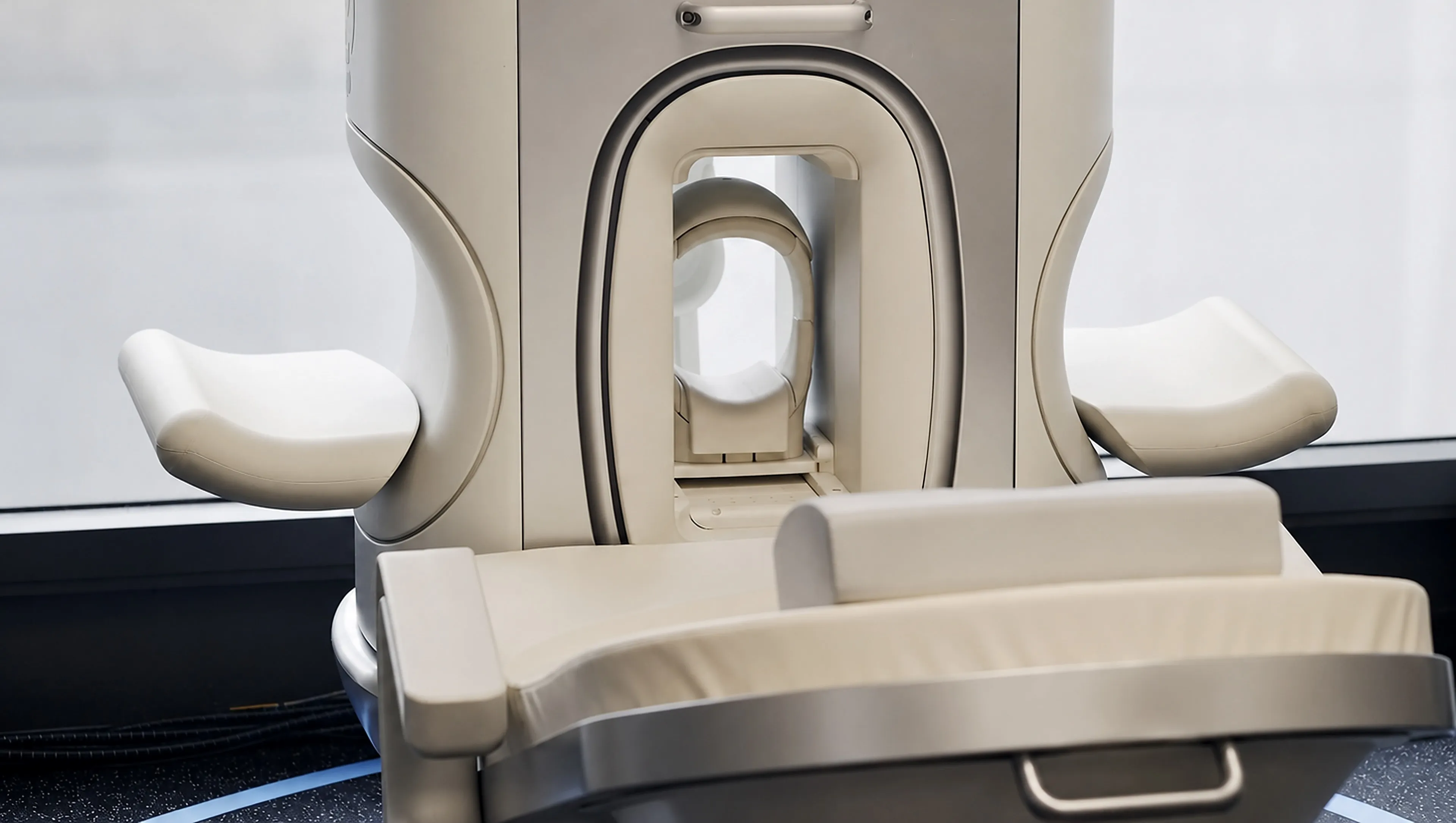
We don't perform full-body MRI. We don't try to image every anatomy. We focus exclusively on musculoskeletal MRI, starting with knees.
Every protocol we use is designed specifically for the area being scanned, and every workflow is built around those examinations. We continually improve our imaging based on radiologist feedback, with a focus on sharper images, greater consistency and a better service for our clients.
Continuous improvement is part of our culture. We're always refining how we scan and support our clients, so we can deliver the highest-quality images and reports, along with the best possible experience.
Our goal isn't to do everything.
It's to do musculoskeletal MRI exceptionally well.
The InForm difference.
Where we're going.
We're not trying to build another MRI clinic. We're building a future where people spend less time waiting, more time recovering, and have the information they need to make confident decisions sooner.
“We don't measure success by the number of scans we run. We measure it by the number of people we help.”
Why InForm exists.
Most MRI clinics start with a scanner. InForm started with a purpose.
If MRI has advanced so far, why are people still waiting months for answers?
A torn meniscus. A stress fracture. An ACL that isn't quite right. The injury happens in a moment, but the answer can take months. The wait to get an appointment. The wait for the scan. The wait for the results. By the time someone knows what's wrong, they've lost time they can't get back.
Where it all started.
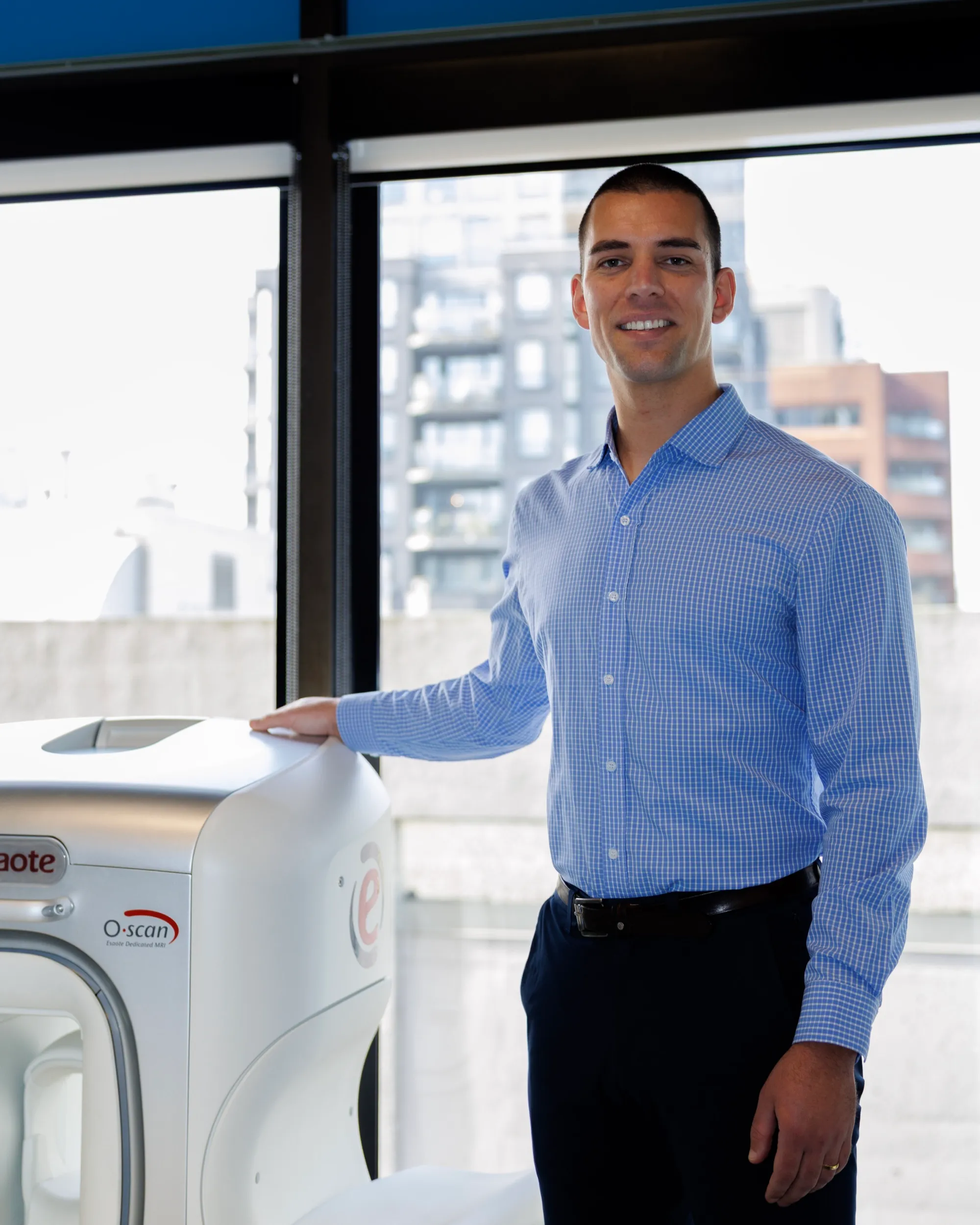
Before founding InForm, Adam Dvorak, PhD, spent his career advancing MRI technology. As an MRI physicist, he worked across the full spectrum of MRI, from developing advanced imaging techniques, used by leading academic medical centres, to helping shape the future of portable MRI technology, designed to bring medical imaging to underserved communities around the world.
His research focused on one goal: producing faster, higher-quality MRI images. Along the way, he developed novel imaging techniques, collaborated with MRI manufacturers including Philips, GE HealthCare, Hyperfine, and Esaote, and worked alongside international research teams to translate new technologies into real-world clinical practice.
He led a multidisciplinary development team that produced two novel low-field MRI techniques and more than ten conference publications, all with the goal of improving access to high-quality medical imaging.
He has authored over 20 peer reviewed publications which have garnered about 1,000 citations, and his innovations continue to influence MRI research today.
But the more Adam worked on MRI technology, the more apparent another problem became. The technology itself was only part of the equation. MRI could become faster, the images could become sharper, but none of it matters if people can't get access to MRI.
That was the problem InForm was built to solve.
“After spending years improving MRI technology, I realized the biggest limitation wasn't the scanner, it was access.”
Built for better access.
Most imaging centres try to be everything to everyone. We don't.
Adam says: “You don't actually need an entire toolbox. You just need the right tool for the job.”
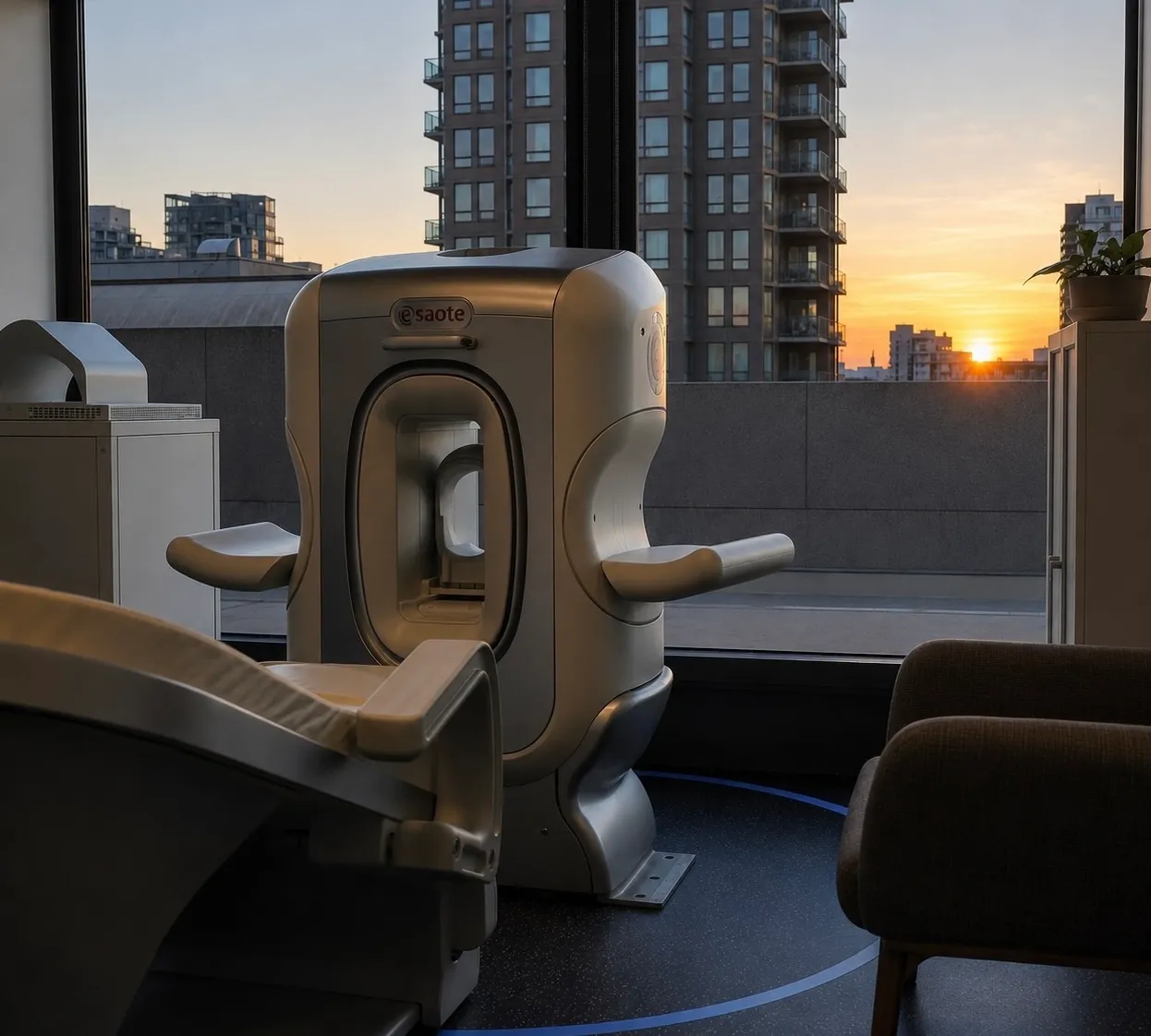
We don't perform full-body MRI. We don't try to image every anatomy. We focus exclusively on musculoskeletal MRI, starting with knees.
Every protocol we use is designed specifically for the area being scanned, and every workflow is built around those examinations. We continually improve our imaging based on radiologist feedback, with a focus on sharper images, greater consistency and a better service for our clients.
Continuous improvement is part of our culture. We're always refining how we scan and support our clients, so we can deliver the highest-quality images and reports, along with the best possible experience.
Our goal isn't to do everything.
It's to do musculoskeletal MRI exceptionally well.
The InForm difference.
Where we're going.
We're not trying to build another MRI clinic. We're building a future where people spend less time waiting, more time recovering, and have the information they need to make confident decisions sooner.